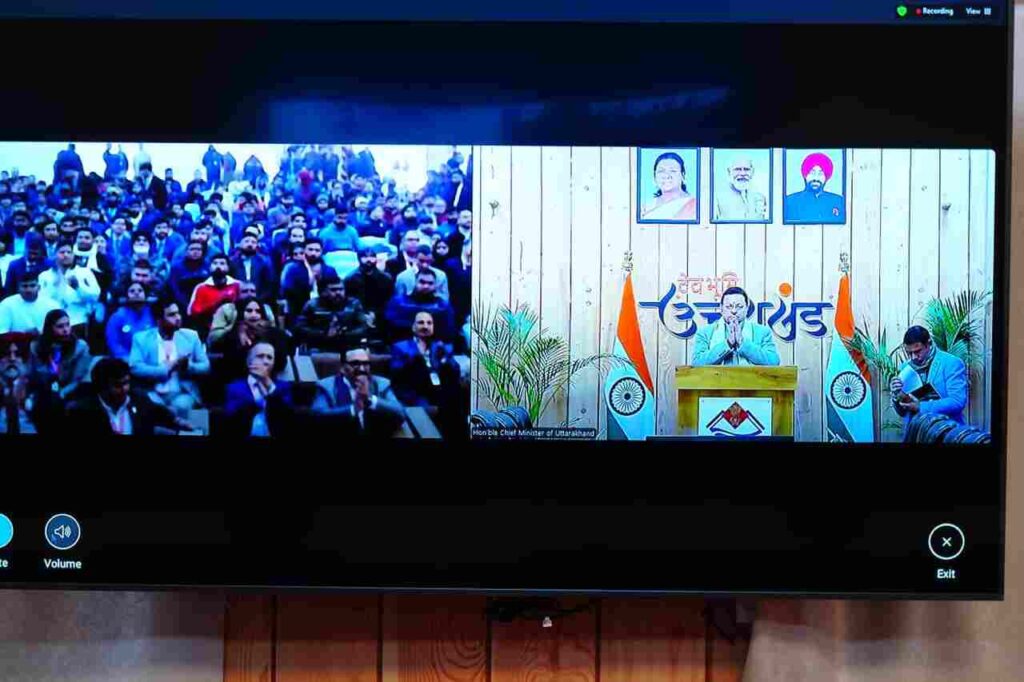
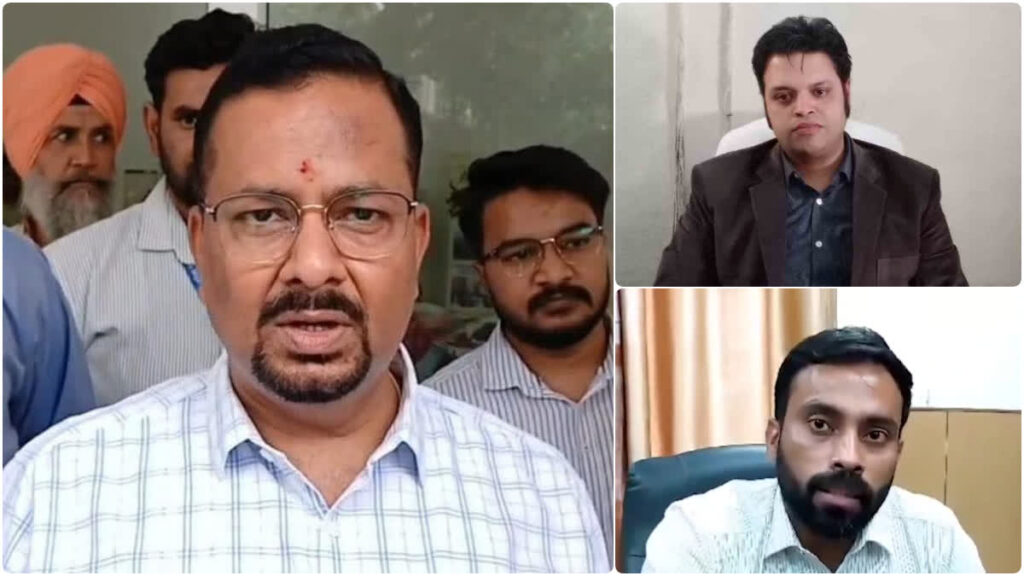
While addressing a gathering of esteemed personalities and top brass government officers – DG, Department of Information and Public Relation (DIPR) Banshidhar Tiwar expressed his concerns over negative consequences of virality without accountability in this era of booming Social Media. He said that Social media and newspapers today function as complementary forces rather than competitors. In the digital age, news breaks first on social media, reaching the public at unprecedented speed. As a result, newspapers often appear to carry “stale” news. This reality compels print media to focus more on creativity, depth, analysis and credibility to remain relevant and competitive.
In his speech, Tiwari raised an important question: who truly qualifies as a journalist? He further adds that in the virtual world, identifying a journalist has become increasingly difficult, as anyone can publish content while easily concealing their real identity. On social media platforms, it is often impossible to distinguish between a trained journalist and an ordinary individual. To the common reader, every writer appears to be a journalist, regardless of credentials or accountability.
DG, DIPR sharing his thoughts over risks and responsibilities involved in the profession of journalism emphasized that journalism cannot be defined merely by the act of writing. A journalist, in its truest sense, is one who writes with responsibility. Those who publish without accountability remain ordinary users, not journalists. The difference lies not in the platform but in the ethics behind the content. When responsibility disappears and irresponsibility takes over, social media risks turning into an exploitative space.
Unlike social media, newspapers operate within a framework of accountability as every report carries the name of the writer, the publisher, and verifiable facts, creating a permanent documentary record. Newspapers take responsibility for the information they disseminate, supported by editorial gate-keeping and verification. Social media, by contrast, lacks such safeguards. Anonymous pages can circulate half-baked or false information, which is then widely shared through screenshots across platforms and WhatsApp groups. Even if the original post is deleted, its digital footprint often survives indefinitely. Completely erasing fake information from the digital space is nearly impossible, causing long-term harm to society and individuals alike, he further adds.
Tiwari opined that in this complex media landscape, the challenge is not to pit social media against newspapers, but to strengthen responsible journalism. Speed may belong to social media, but credibility, accountability and thoughtful storytelling must remain the domain of newspapers.
During deliberations on responsibility, credibility and the future of print media-Banshidhar Tiwari strictly advocated about the process of gate-keeping and accountability. He elaborated that there is a clear and fundamental difference between the writing of a responsible journalist and that of an ordinary social media user that can be manipulative and exploitative at times owing to vested interests and no answerability. In this sense, social media often functions like a double-edged borrowed sword—powerful, but dangerous—unlike newspapers, which operate within a defined structure of accountability.
Tiwari further asserted that to stay relevant, print must invest in creativity and highlight inspiring human stories beyond politics and crime. Positive narratives, like the Bhimtal woman’s inspiring tale still resonating today, prove meaningful journalism leaves a lasting impact on society.
Social Media, Mobile Phones and the Erosion of Social Bonds
He argued that the threat of fake information is far lesser than the dismantling of our social and family system, as binge watch is taking tolls on our mental and hormonal health. Rapid exposure to alternating emotions—humour, grief, anger and affection—can disturb the body’s natural hormonal balance, directly influencing human behaviour and temperament. Such constant emotional fluctuations often leave a negative imprint on personality, he further delineated. Tiwari supported his words with the example of a recent incident in Gorakhpur, where the staff of an old-age home approached the son of a woman after her death through video conferencing, requesting him to collect her body and perform the last rites. The son reportedly asked them to keep the body in a freezer for two days, citing a wedding at home and his inability to come immediately. Such incidents starkly expose the alarming decline in societal values and demand serious reflection.
He stated that that the spread of fake information is often driven by personal ambition and the hunger for visibility, followers and virality. In the race to make content “trend,” individuals circulate information without verification, motivated by greed rather than responsibility. Whether it fuels caste-based hatred or spreads misleading narratives, such misinformation travels at great speed, and its consequences are borne not by a few individuals but by society as a whole.
In his concluding remarks, DG, DIPR Banshidhar Tiwari asserted that in today’s digital age, the biggest challenge is to protect society, individuals and the information ecosystem from the excesses of social media and to provide it with a healthier direction. Only then can social media remain a platform for communication and awareness, rather than descending into an exploitative and destructive force, he added.
Disclaimer: This news is written on the basis of information received from different authentic sources.