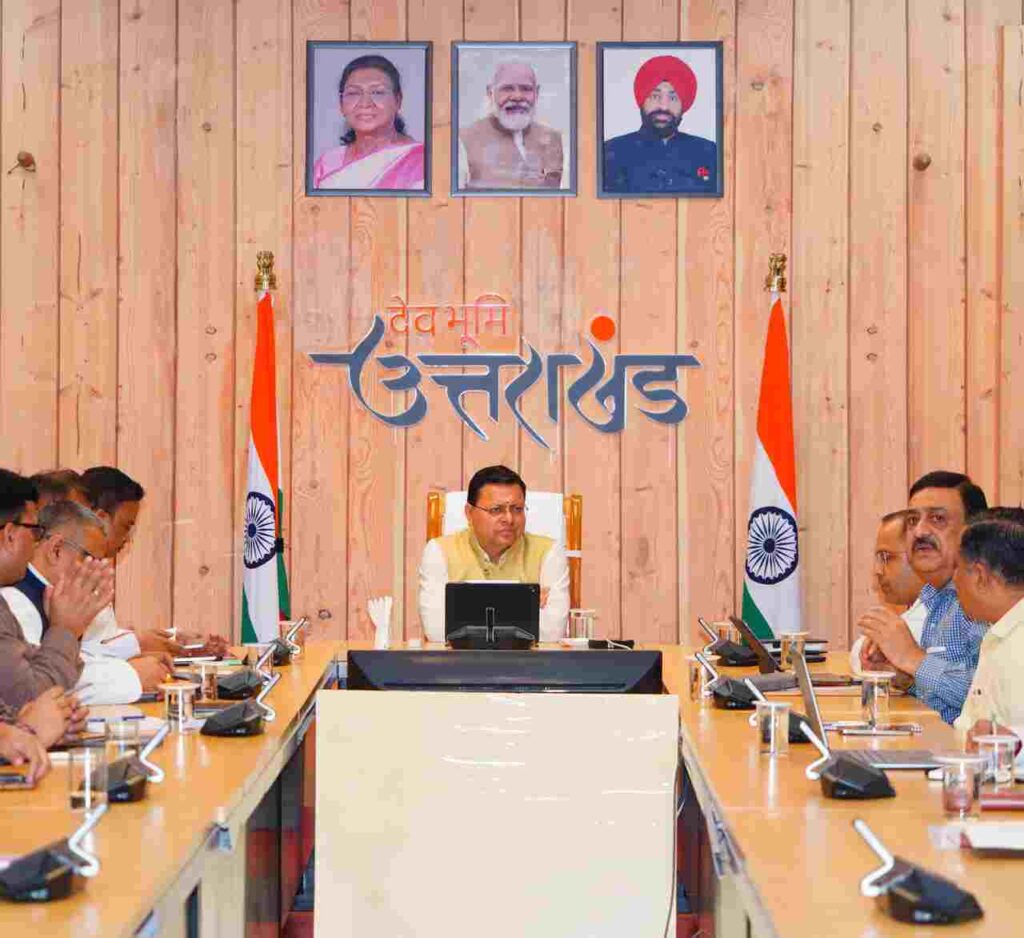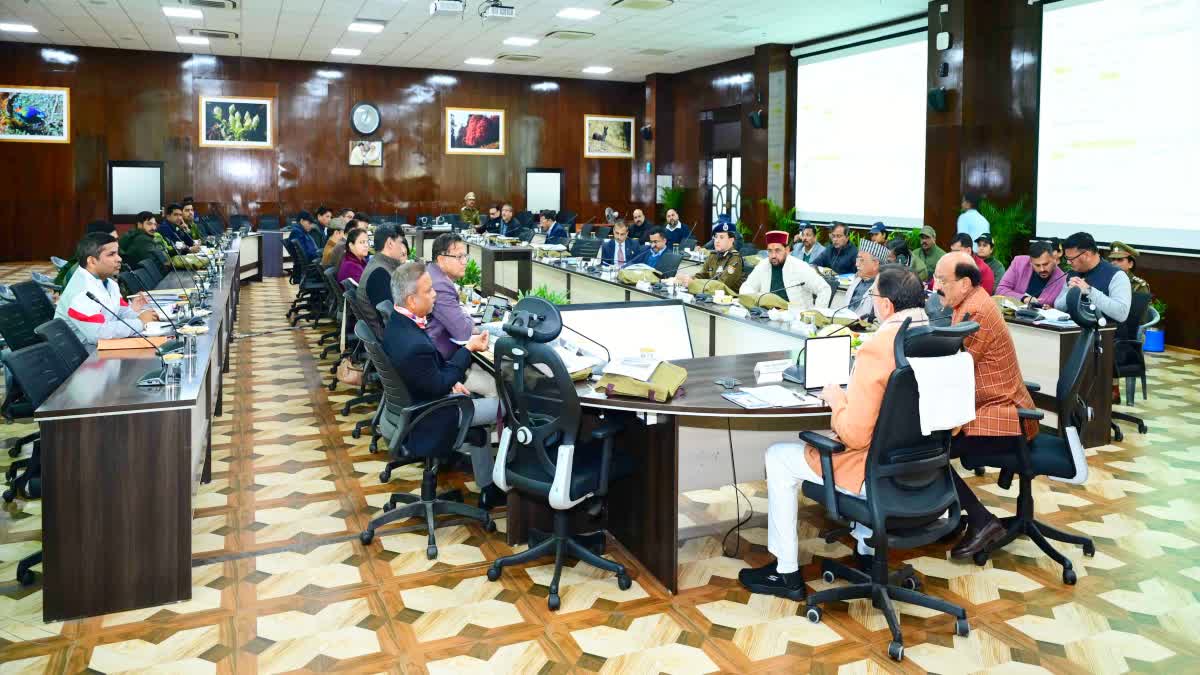
Dehradun: The 22nd meeting of the Uttarakhand State Wildlife Board was held at the Secretariat on Tuesday, chaired by Chief Minister Pushkar Singh Dhami. In the meeting, the Chief Minister expressed concern over the increasing incidents of human-wildlife conflict and instructed that more effective steps be taken to control it. The Chief Minister said that vigilance should be increased in areas related to bears, leopards, tigers, and elephants, and a joint monitoring system should be ensured by the Forest Department and the district administration.
The Chief Minister instructed that regular patrolling, digital surveillance, and early warning systems should be kept fully active in sensitive areas. The Chief Minister said that solar fencing, bio-fencing, honey bee fencing, watchtowers, and other protective measures should be mandatorily installed in affected villages. He also instructed that awareness camps be organized to make villagers aware of vigilance and safety, and that the rapid response team be kept continuously active.
The Chief Minister said that the conservation of all wildlife corridors in the state, including elephant and tiger corridors, should be given top priority. The system of constructing animal passes, underpasses, and overpasses on wildlife movement routes should be implemented more effectively. He instructed that if any amendments are required in the current wildlife conservation rules or provisions, the concerned department should conduct the necessary review and send the amendment proposal to the government soon.
In the meeting, the Chief Minister instructed that the Wildlife Coordination Committee at the district level, chaired by the District Magistrate, should be kept active, and hotspot mapping of sensitive districts, blocks, and villages should be completed immediately. He instructed that security arrangements be strengthened around schools, Anganwadis, water sources, and footpaths. The Chief Minister said that solid waste management should be strictly implemented in rural areas so that bears and other wildlife are not attracted to populated areas.
The Chief Minister said that to further strengthen the eco-tourism system, work should be done not only in reserved forests but also in the state’s wildlife sanctuaries and conservation reserve areas. To mitigate human-wildlife conflict and ensure public safety, arrangements should be made for veterinarians in the Territorial Forest Division.
A total of 9 proposals related to forest land transfer were approved at the meeting. These include 4 diverse drinking water schemes and 2 drinking water schemes in Kedarnath Wildlife Sanctuary in Rudraprayag district, 2 motor road projects connected to the Rajaji National Park area, and one optical fiber proposal related to the Ramnagar Forest Division. In addition, it was decided to refer 22 proposals related to minor mineral extraction within a 10-kilometer radius of protected areas to the National Wildlife Board for consideration.
Forest Minister Subodh Uniyal said that the decisions taken at the State Wildlife Board meeting are a comprehensive and far-sighted step towards establishing a balance between wildlife conservation and human safety, which will further strengthen the wildlife management system in Uttarakhand.
Giving information about the action taken on the decisions of the 21st meeting of the Uttarakhand State Wildlife Board, Principal Chief Conservator of Forests Ranjan Kumar Mishra informed that the Standing Committee of the National Wildlife Board has granted approval for the redevelopment of Chaurasi Kutiya, the first phase of reconstruction work for the damage caused by the disaster at Mansa Devi Temple and its approach road, the construction of the Rishikesh Neelkanth Mahadev रोपवे project, and the special renovation of the Laldhang-Chillerkhal forest motor road. Wildlife Management Plans for 56 forest land transfer proposals have been approved for the period from July 2025 to December 2025, while No Objection Certificates have been issued for 29 proposals. The ex-gratia amount for cases of human death caused by wildlife has been increased from Rs. 6 lakh to Rs. 10 lakh. 93 Quick Response Teams (QRTs) have been formed for prompt action on human-wildlife conflict in 32 forest divisions. Approval has also been given to send proposals to the Central Zoo Authority for the establishment of wildlife rescue centers in Pithoragarh, Champawat, and Rudraprayag. The meeting was attended by State Wildlife Board members MLA Diwan Singh Bisht, Suresh Singh Chauhan, Banshidhar Bhagat, Principal Secretary Forest R.K. Sudhanshu, Principal Chief Conservator of Forests Ranjan Kumar Mishra, Director General of Police Deepam Seth, other members, and officials from the Forest Department.