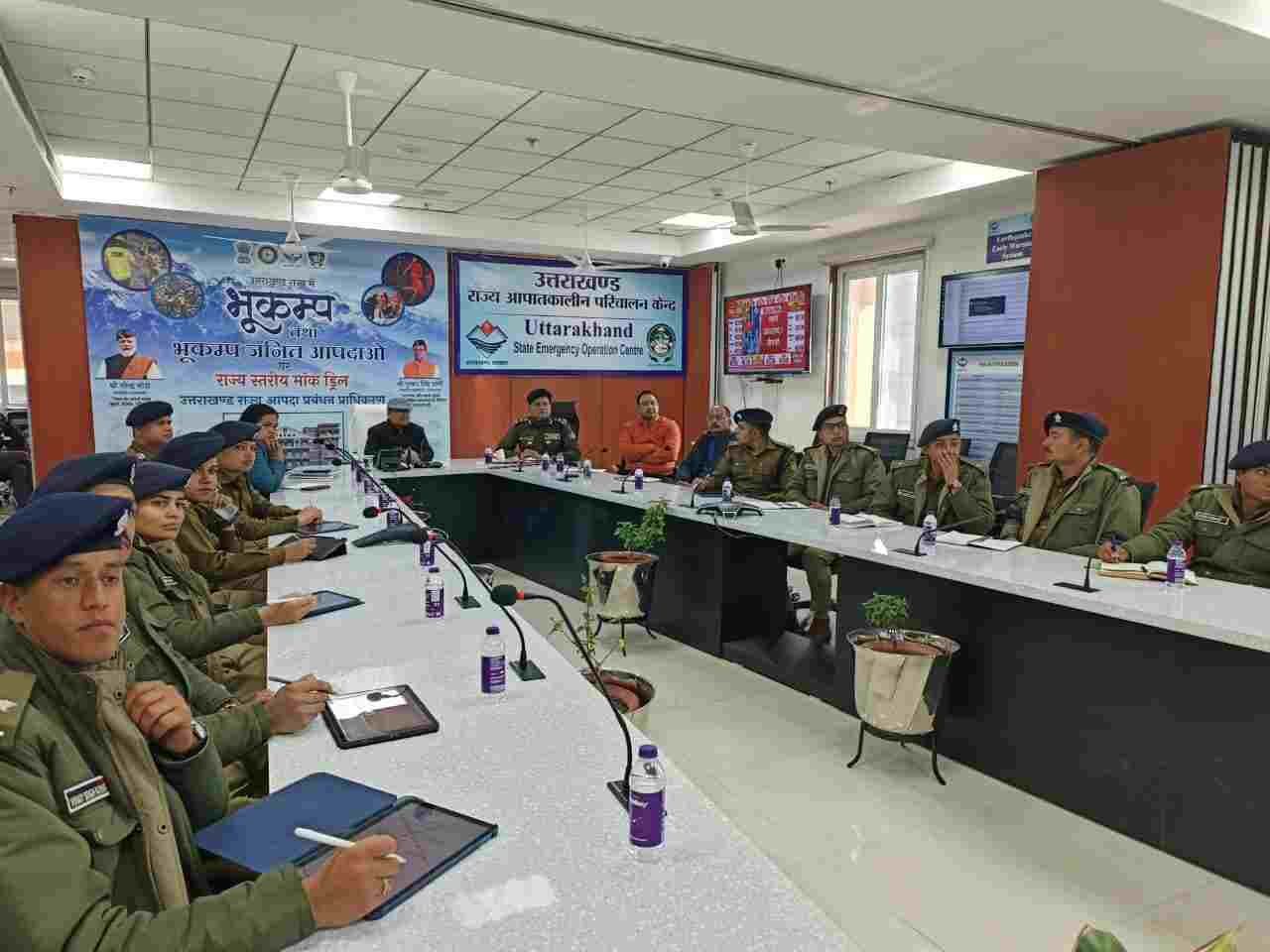
Dehradun: Trainee Deputy Superintendents of Police from the 2024 batch at the Uttarakhand State Disaster Management Authority (USDMA) were briefed on the state’s disaster management system, institutional framework, and the role of police officers and the department in various stages of disaster management.
During the session, the trainee officers were given detailed information about the functioning of the disaster management department, the concept and structure of the Incident Response System (IRS), the warning dissemination system, pre-disaster preparedness, rapid response during a disaster, and post-disaster rehabilitation and reconstruction processes. The role of the National Disaster Management Authority and the Uttarakhand State Disaster Management Authority, their policy guidelines, and the process of their implementation at the state level were also highlighted. The officers were also familiarized with the functioning of the SEOC and DEOC.
Addressing the program, Secretary Disaster Management and Rehabilitation, Vinod Kumar Suman, said that the role of the police department is extremely important and sensitive throughout the entire disaster management cycle – before, during, and after a disaster. He said that in any disaster situation, the police force is one of the first major agencies to arrive at the scene, and its responsibility is not limited to maintaining law and order, but also includes ensuring the safety of human lives and actively participating in rapid relief and rescue operations.
He explained that the key roles of the police during a disaster include ensuring quick access to affected areas, safe evacuation, crowd and traffic management, facilitating the uninterrupted distribution of relief materials, securing sensitive locations, controlling rumors, and disseminating accurate information. In addition, coordinating with the administration, disaster management department, health, fire services, SDRF, and other agencies to ensure effective joint action is also a crucial responsibility of the police.
He said that the trainee officers will have to perform strategic and leadership roles related to disaster management as responsible police officers in the future. He said that in such times, dedication, devotion, human sensitivity, discipline, and quick decision-making ability are the keys to effective disaster management. He expressed hope that such orientation programs would provide the trainee Deputy SPs with a practical understanding of disaster management and that they would make a significant contribution in the future to making the state’s disaster management system more robust, effective, and people-oriented.
Present on this occasion were Additional Chief Executive Officer (Implementation) DIG Rajkumar Negi, Joint Chief Executive Officers Mohd. Obaidullah Ansari, Dr. PD Mathur, Manish Bhagat, Dr. Pooja Rana, along with trainee Deputy SPs Daksh Shokhand, Aditya Tiwari, Lav Sharma, Divyesh Upadhyay, Ankit Thapliyal, Samiran Bhatt, Vinay Singh, Avani Tiwari, Deepti Kaida, and Tanuja Bisht.